Buckminster Fuller popularized the geodesic dome as the most efficient, durable, and lightweight architectural shape possible. The concept involves relying on a network of triangles to create a roughly spherical surface. While his dream of solving the post-war housing crisis didn't pan out, a subculture of eccentric builders adopted the shape, dotting remote forests and deserts with these strange structural oddities.
Challenging Zoning Laws
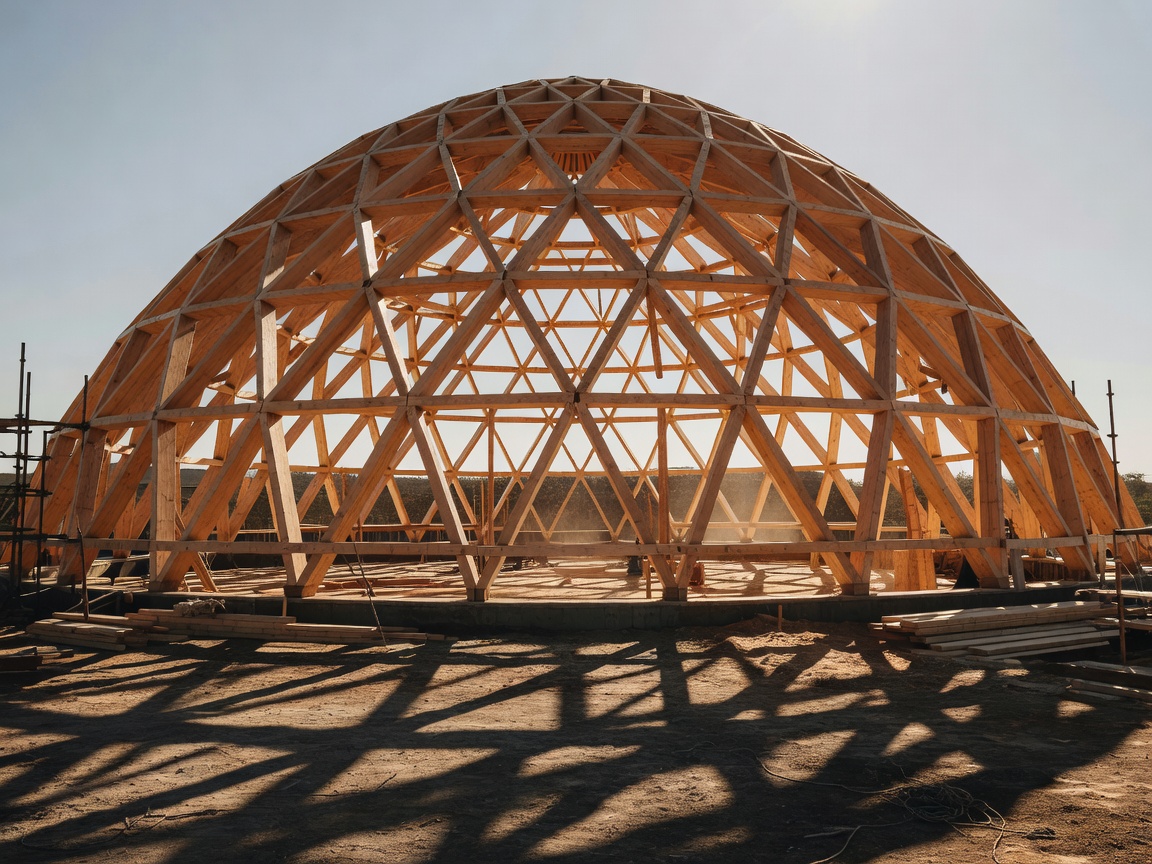
Building a sphere in a world designed for boxes naturally causes friction. Municipal zoning codes strictly define square footage calculations, roof slopes, and setbacks—metrics that often break down entirely when applied to a dome. For many rogue builders in the 1970s, establishing a dome house meant engaging in prolonged battles with baffled city planners who simply had no code to evaluate a building lacking clear delineations between walls and a roof.
Acoustic Oddities
Living inside a sphere completely alters domestic acoustics. The curved walls focus sound waves toward the center of the structure, creating "whispering gallery" effects. A conversation held in a normal tone on one side of a large open-plan dome can be heard with crystalline clarity on the exact opposite side, while remaining entirely inaudible to someone standing in the middle of the room. This makes private phone calls nearly impossible and ensures the sounds of cooking clatter endlessly around the interior.
The Geometry of Leaks
The primary curse of the geodesic domestic lifestyle is water management. With hundreds of distinct triangular joints facing upwards toward the elements, the dome is notoriously difficult to seal perfectly. The dark joke among dome dwellers is that there are only two types of geodesic homes: those that leak, and those that are going to leak soon. Modern materials have mitigated some of these issues, but the sheer volume of seams remains an engineering liability.